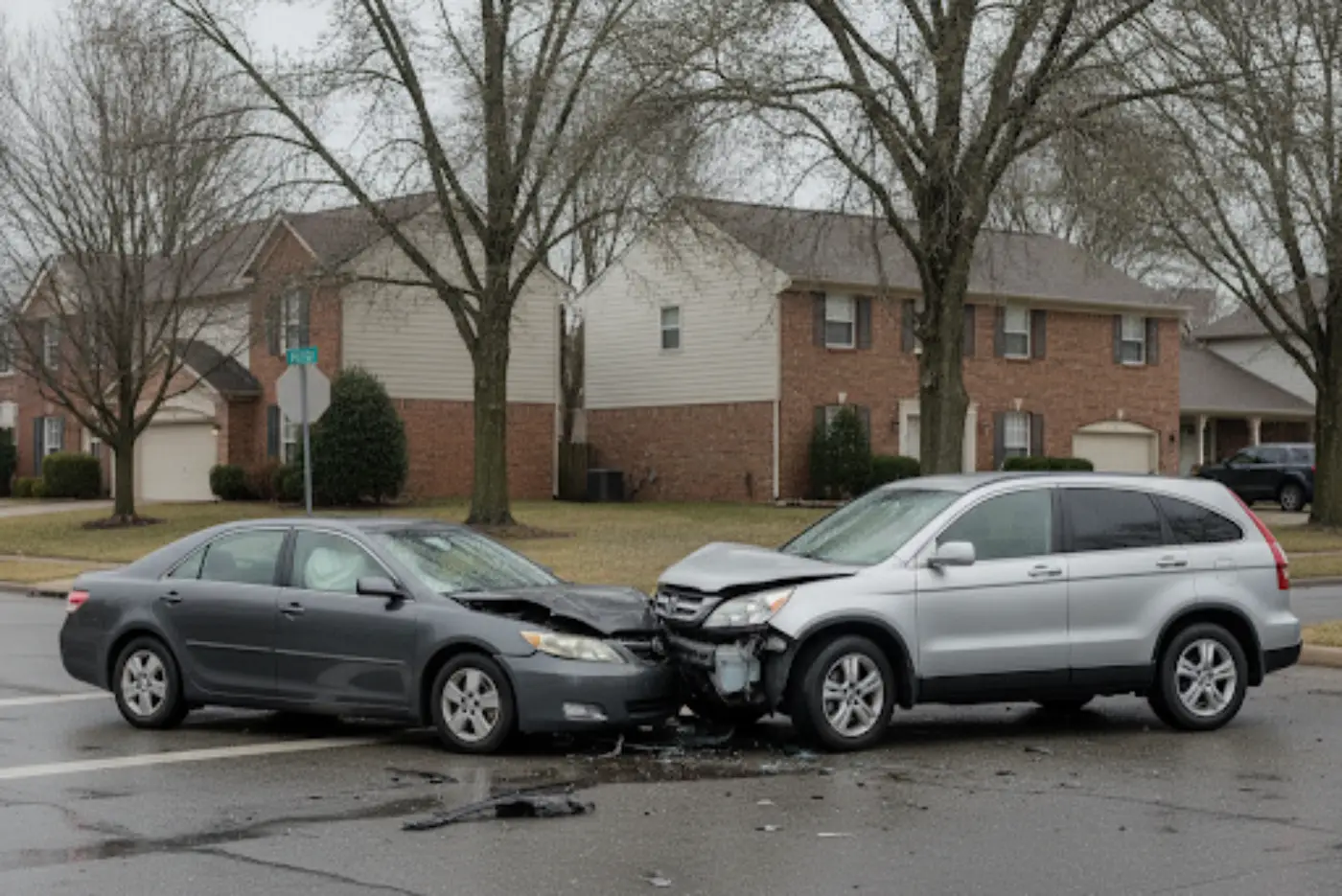

A ruptured spleen or a bleeding liver puts you in an operating room within hours, and the recovery that follows rarely matches the timeline an insurance adjuster has in mind. You may be out of work for months, restricted from lifting anything heavier than a grocery bag, and fielding calls asking for a recorded statement before your discharge paperwork is filed. Our Alexandria catastrophic injury lawyers at Tronfeld West & Durrett know how carriers attack organ trauma claims, and we build the medical record that answers them. We offer a free consultation, and there is no fee unless we win your case.
Free Consultation With an Alexandria Internal Injury Attorney
Organ injuries move quickly, and most of the proof is generated in the first days of treatment. On your initial screening call you will talk to someone about your case, and we cover:
- The mechanism of the impact, including seatbelt loading, steering column contact, or the height and landing surface of a fall
- What the trauma workup found, including CT results, hemoglobin trends, and whether you were admitted for observation or sent home
- Which specialists have treated you since, from the surgical team to gastroenterology or pulmonology, and what activity restrictions remain
- What the carrier has already requested from you, and what should not be handed over without a lawyer reviewing it first
We are local attorneys with strong ties to the Alexandria, Virginia community, and we will tell you plainly whether your claim needs a lawyer or just needs better documentation.
For answers to your questions about a internal injury in Alexandria, call: 800-321-6741
How Our Alexandria Internal Injury Attorneys Can Help You
- Request the actual imaging files, not the radiology summary. Hospital systems store CT and FAST ultrasound studies as DICOM data. We obtain those files so our own consulting physicians can read the study rather than relying on a one-paragraph impression written during a busy shift.
- Chart the hemoglobin and hematocrit curve across your admission. A blood count falling over consecutive draws is often the most objective proof that you were bleeding internally, and it sits in lab data that no adjuster can talk away.
- Pin down the injury grade, not just the diagnosis. Spleen, liver, and kidney injuries are graded by severity on the scale published by the American Association for the Surgery of Trauma. A grade IV laceration and a grade I contusion carry different treatment and different value.
- Preserve the physical evidence that proves force. Crush measurements, seatbelt webbing marks, airbag deployment, and event data recorder downloads establish the load your torso absorbed, which is what connects the collision to the organ injury.
- Build the future-care picture for permanent organ loss. A removed spleen means lifelong infection risk and a standing vaccination schedule. Bowel resection can mean permanent dietary limits. Those costs belong in the claim and are often left out of early offers.
- Take over carrier contact before a recorded statement happens. Telling an adjuster you felt fine at the scene is normal and honest, and it is also the sentence most often used later to argue your injury came from something else.
Tronfeld West & Durrett has recovered multi-million-dollar results for Virginia clients with catastrophic injuries. We are big enough to retain the trauma surgeons and life care planners these files require, and small enough that you will know the lawyer handling your case.
How Virginia Law Treats a Delayed Internal Injury Diagnosis
The Two-Year Clock Runs From the Crash, Not the Diagnosis
Virginia Code § 8.01-243 gives most injured people two years from the date of injury to file suit. Internal injuries are often identified days or weeks later, on a return visit or a repeat scan, and that later date does not restart the clock. Waiting until treatment finishes to speak with a lawyer can leave almost no room to investigate.
Proving the Collision Caused the Bleed
Virginia requires proof of duty, breach, causation, and damages. Causation carries the weight in organ injury files, because carriers rarely dispute that a crash occurred and commonly dispute that it caused what the scan showed. Satisfying the elements of a negligence claim means tying the mechanism of impact to the specific structure injured, in the words of your treating physicians.
Deadlines and proof standards shift with the facts, and a free consultation is the fastest way to find out which ones govern your claim.
Click to contact us today
Where Internal Injuries Happen in Alexandria
Highway-Speed Impacts on I-95 and I-395
The interstates carrying commuters through Alexandria produce the deceleration forces most associated with solid organ injury and aortic trauma. Truck accidents on these corridors add mass to the equation, and a loaded tractor-trailer striking a passenger vehicle transfers force that seatbelts and airbags were never designed to fully absorb.
Intersection and Turning Collisions on Surface Streets
Side-impact strikes along King Street, Duke Street, and Richmond Highway load the torso laterally, where far less structure protects the spleen, liver, and kidneys than in a frontal impact. Many Alexandria car accident clients walk away from these crashes and only return to the emergency department at Inova Alexandria Hospital on Seminary Road a day or two later. That gap is exactly where delayed symptoms after a crash become a legal problem as well as a medical one.
Falls, Struck-By Events, and Unsafe Property
A fall onto a railing, a stair edge, or a loading dock can rupture internal organs without leaving a visible wound. Slip and fall and premises liability claims involving older buildings in Old Town raise separate questions about notice and maintenance history. Pedestrians struck by turning vehicles absorb the impact directly to the abdomen and chest.
If your incident does not fit neatly into one of these categories, it is still worth a call. Force is force, and the medical proof works the same way.
Complete a Free Case Evaluation form now
Injuries Caused by Internal Trauma in Alexandria
Internal injuries are grouped by the structure damaged, and each carries its own treatment arc and its own long-term risk:
- Splenic laceration and rupture. The most commonly injured abdominal organ in blunt trauma, and the one most likely to require emergency removal.
- Liver laceration. Ranges from bleeding managed by observation to injuries requiring operative repair and transfusion.
- Kidney contusion and laceration. Can produce blood in the urine, perinephric hematoma, and lasting reductions in filtration.
- Bowel perforation and mesenteric tears. Regularly missed on initial imaging and capable of causing sepsis when diagnosis is delayed.
- Pneumothorax, hemothorax, and pulmonary contusion. Air or blood in the chest cavity compromises breathing and often accompanies rib fractures.
- Retroperitoneal and pelvic bleeding. Difficult to control and commonly seen alongside pelvic fractures.
- Diaphragmatic rupture. Sometimes identified only when abdominal contents appear in the chest on follow-up imaging.
Severe internal trauma typically travels with a traumatic brain injury, and when a bleed is not caught in time our firm also handles wrongful death claims for families. Documenting every injured structure from the first admission forward is what keeps a carrier from treating a life-altering event as a short hospital stay.
Compensation Available After an Internal Injury in Alexandria
Organ injury claims carry an unusual damages shape: a steep acute cost concentrated in the first weeks, followed by years of monitoring, restriction, and risk that never appears on a hospital bill. We build both halves.
Economic Damages
Emergency transport, trauma bay workup, surgery and anesthesia, intensive care days, transfusion, repeat imaging, and the follow-up specialist visits that continue long after discharge. Lost income belongs here as well, including the reduction in earning capacity when permanent lifting limits or infection risk close off the work you did before.
Non-Economic Damages
The experience of internal bleeding, emergency surgery, and a recovery spent waiting to learn whether an organ will function normally again is not captured by receipts. Virginia allows recovery for pain and suffering, emotional distress, and the loss of activities that a body with a repaired or missing organ can no longer safely do.
Each category is proven with records, treating physician opinion, and where the injury is permanent, a life care plan. Our firm assembles that documentation before any number is discussed, because a demand made before the long-term picture is known is a demand made too early.
Liability and Virginia’s Contributory Negligence
Liability in an internal injury claim can reach the at-fault driver, a trucking company answerable for its driver and equipment, a property owner who let a hazard persist, or a manufacturer whose product failed. Serious injury suits are filed in the Alexandria Circuit Court when the amount in controversy exceeds the General District Court limit, and the venue shapes both timeline and strategy.
Virginia remains one of a small number of states applying pure contributory negligence. If a jury finds you even one percent responsible, you recover nothing. Defense counsel knows this and works backward from it, and that is why arguments about your speed, your seatbelt, your footwear on a stairway, or your decision to decline an ambulance surface early. Virginia’s contributory negligence rule makes an early, disciplined investigation far more valuable than it would be in a comparative fault state.
Protecting your claim from contributory fault arguments is one of the first things our team does, and this is why calling a Virginia attorney quickly after an accident matters.
Why Choose Tronfeld West & Durrett?
John Newby has been selected to Virginia Super Lawyers every year since 2015, earned a 2026 Best Lawyers in America selection, and has had verdicts and settlements ranked among Virginia Lawyers Weekly’s largest of the year, including the sixth largest settlement in the state in 2016. Here is his perspective on internal injury claims in Alexandria.
“The organ injury files that resolve well are the ones where the objective record was locked down while the client was still admitted. Serial lab values, the actual imaging, the operative note, and the vehicle itself tell a story an adjuster cannot argue around. When we are called after discharge and the car has already gone to salvage, we are rebuilding that story instead of just presenting it.”
Do You Have a Claim?
You likely have a claim worth reviewing if:
- You underwent surgery, transfusion, or an intensive care admission after a collision or fall in Alexandria
- Imaging or an operative report documents injury to an organ, a blood vessel, or the chest cavity
- Someone else’s driving, property maintenance, or equipment created the force that injured you
What Cases Like Yours Have Recovered
Our verified results include a $3,025,000 settlement where plaintiffs claimed road workers waved a driver through a red light, and a $2.3 million recovery for a passenger left disabled in a single-vehicle accident. Further examples sit on our case results page.
Whatever your file looks like, we would rather tell you early that it is straightforward than have you find out late that it was not.
Contact an Alexandria Internal Injury Lawyer
If you or someone in your family suffered internal injuries in Alexandria, the evidence that decides the claim is being created right now, in lab draws, imaging, and repair estimates that will not exist in the same form six months from now.
Contact Tronfeld West & Durrett to speak with an Alexandria internal injury attorney at no cost. With over 50 years of experience in Virginia and four offices across the Commonwealth, we are big enough to handle any case and small enough to have a personal feel. There is no fee unless we win your case.
FAQs About Alexandria Internal Injury Cases
How do you know if you have internal injuries after a car accident?
The warning signs include abdominal pain or tenderness, deep bruising across the seatbelt line, lightheadedness or fainting, shortness of breath, pain at the tip of the shoulder, blood in the urine, and a pulse that climbs while blood pressure falls. These can appear hours or days after the collision. Any of them justifies an immediate return to the emergency department, because a slow bleed can become an emergency without warning.
What counts as an internal injury in a Virginia injury claim?
Damage to organs, blood vessels, or body cavities that is not visible from the outside. That covers spleen, liver, kidney, bowel, bladder, lung, and diaphragm injuries, along with internal bleeding and vascular tears. The legal question is not the label but whether the records tie the injury to the incident and show what it will cost you.
The insurance company says my internal injury was pre-existing. Can I still recover?
Often yes. Virginia law permits recovery when a defendant aggravates a condition you already had, because a defendant takes an injured person as they find them. What matters is medical evidence showing a change from your prior baseline, and that explains why older imaging and records are often as valuable as the new ones.
How is an internal injury claim valued in Alexandria?
Value tracks the severity grade, the surgery required, permanence such as organ removal, time out of work, and how the injury restricts you going forward. How pain and suffering is calculated plays a large role, because the non-economic side of an organ injury usually exceeds the bills. Available insurance also sets a practical ceiling worth identifying early.
What is the filing deadline for an organ injury claim in Virginia?
Virginia Code § 8.01-243 sets a two-year deadline for most personal injury actions, measured from the date of injury rather than the date of diagnosis. Different deadlines apply to claims against government entities and to wrongful death actions. The statute of limitations for Virginia personal injury claims is unforgiving, and missing it ends the claim regardless of merit.
Call or text 800-321-6741 or complete a Free Case Evaluation form