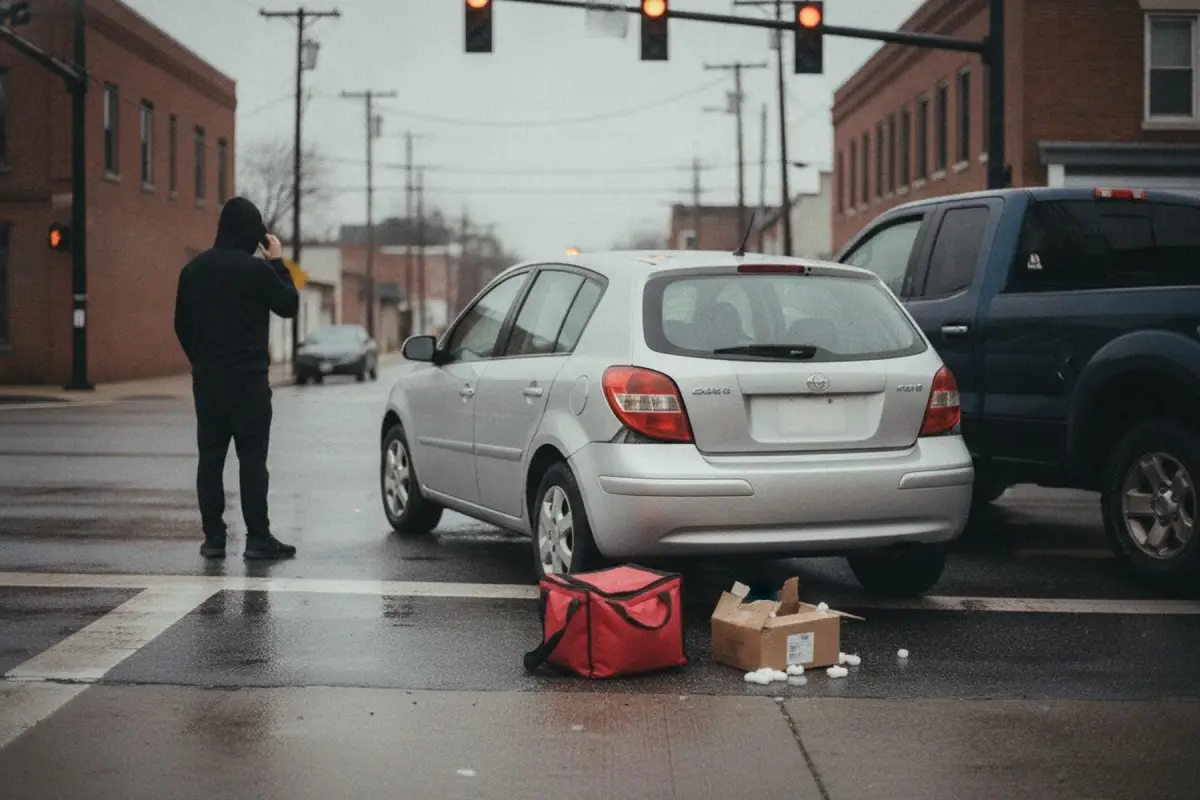

A rental car accident raises insurance questions that never come up in your own car: whether your policy follows you into the rental, whether the credit card you used covers anything, what the counter coverage actually included, and whether the rental company can be held responsible at all. The answers depend on who caused the crash and which policies are in place, and Virginia’s strict fault rules add another layer. This post walks through who pays for injuries and vehicle damage in the most common rental car scenarios. If you were hurt, our Richmond car accident attorneys at Tronfeld West & Durrett can identify every policy that should respond.
If Another Driver Hit Your Rental Car
When someone else causes the crash, the claim for your injuries works much like any other Virginia car accident. The at-fault driver’s liability insurance is the primary source of payment for your medical bills, lost income, and pain and suffering.
Virginia drivers must carry minimum liability coverage, and for policies effective on or after January 1, 2025, Va. Code § 46.2-472 requires at least $50,000 per person and $100,000 per accident for bodily injury, plus $25,000 for property damage. Those minimums run out quickly after a serious injury. Your own uninsured and underinsured motorist coverage can step in when the other driver has too little or none, and the rules on what happens when a car accident exceeds insurance limits apply the same way whether you were in your car or a rental.
Damage to the rental itself is usually handled through the at-fault driver’s property damage coverage, but the rental company may still bill you first and leave you to seek reimbursement. Tronfeld West & Durrett can help keep the rental company’s demands from slowing down your injury claim.
For answers to your questions, call: 800-321-6741
If You Were Driving the Rental and Caused the Crash
If you caused a crash in a rental, other people’s injuries and damages are usually paid through some combination of these sources:
- Your own auto policy. Many personal policies extend liability coverage to rental cars you drive, at least within the United States.
- Rental counter coverage. Supplemental liability insurance purchased at the counter can add protection above your own policy.
- The rental company’s coverage. Rental companies carry insurance, but the order in which policies pay often depends on the rental agreement and the policies involved.
The vehicle damage is a separate question. Your collision coverage may extend to the rental, the counter’s loss damage waiver may cover it if you bought it, and some credit cards provide collision coverage when you pay with the card, often as a secondary benefit. The rental company may also charge for loss of use, administrative fees, and diminished value, and diminished value claims in Virginia work differently from repair claims.
If Someone Driving a Rental Car Hit You
A driver in a rental car is responsible for their own negligence, just like any other driver. What often surprises people is that the rental company usually is not. A federal law known as the Graves Amendment generally prevents rental and leasing companies from being held liable simply because they own the vehicle. The company can still be responsible for its own negligence, such as renting out a car with failing brakes it knew about.
In practice, your claim will usually go to the renter’s personal auto insurer, any supplemental liability coverage they bought at the counter, and your own uninsured or underinsured motorist coverage if those are not enough. The question of what happens when someone else drives your car and wrecks it involves some of the same permissive-use issues that show up in rental claims.
Identifying the right policies in this situation takes work, and our firm requests the rental agreement and insurance information early.
Click to contact us today
Virginia’s Contributory Negligence Rule
Virginia follows pure contributory negligence, which means you can be barred from recovering anything if you are found even slightly at fault. Insurers in rental car cases sometimes argue that a driver unfamiliar with the vehicle or the area was not paying attention, missed a sign, or misjudged a turn. Those arguments have to be answered with evidence.
The elements of negligence still have to be proven against the other driver, and early photos, witness statements, and the police report are key to keeping fault where it belongs. Tronfeld West & Durrett starts building that record right away.
Complete a Free Case Evaluation form now
Steps to Take After a Rental Car Accident
- Call the police and get a report, even for a minor crash.
- Notify the rental company as the rental agreement requires, but keep your description to the basic facts.
- Photograph both vehicles, the scene, and your injuries.
- Gather your rental agreement, receipts, and any proof of counter coverage or credit card benefits.
- Call your own insurer to report the crash and ask whether your policy extends to the rental.
- Get medical care right away, and keep every record.
The paperwork from a rental can be confusing, and our attorneys are used to sorting through auto insurance coverage in Virginia when several policies are involved.
David Durrett on Rental and Commercial Vehicle Crashes
David Durrett, a shareholder at Tronfeld West & Durrett who chairs the firm’s Trucking Litigation section, notes:
“Rental cars, rental trucks, and company vehicles all raise the same question at the start: whose insurance is actually on the hook? The answer is not always the one the first adjuster gives you. We look at the rental agreement, the renter’s personal policy, any coverage bought at the counter, and the injured person’s own underinsured coverage. Sometimes the coverage that resolves the case only turns up after we push for it.”
What Cases Like Yours Have Recovered
Finding the right coverage has made the difference in some of our cases. Tronfeld West & Durrett secured a $675,000 settlement for a 14-month-old who suffered a severe brain injury when a flatbed tow truck struck the family’s minivan, after the firm pursued the question of whether insurance covered the tow truck. The firm also obtained an $850,000 settlement for a woman rear-ended on Interstate 195 in Richmond by a driver in a corporately owned vehicle.
Contact Tronfeld West & Durrett
Rental car crashes can leave you dealing with insurers, a rental company, and your own carrier all at once. We’re big enough to handle any case, small enough to have a personal feel, and our Virginia-born attorneys have served injured Virginians since 1972. The consultation costs nothing, and our fee depends on winning. Get in touch with Tronfeld West & Durrett and tell us what happened.
FAQs About Rental Car Accidents in Virginia
Who is responsible for damage to a rental car?
If another driver caused the crash, that driver’s property damage coverage should pay. If you caused it, the damage may be covered by your own collision coverage, a loss damage waiver you bought at the counter, or a credit card benefit. Otherwise, the rental company may seek payment from you directly.
What happens when you get into an accident with a rental car?
Call the police, notify the rental company, document the scene, and contact your own insurer. Injury claims follow the same Virginia fault rules as any other crash, while the rental company handles the vehicle damage under the terms of your agreement.
Can a rental car company sue you for damages?
Yes. If you damaged the car and no coverage pays, the rental company can pursue you for repair costs and sometimes for loss of use, administrative fees, and diminished value. Reviewing the rental agreement and your insurance coverage early can often resolve these demands without a lawsuit.
Can I sue the rental car company if a renter hit me?
Usually not just because the company owns the car, because of the federal Graves Amendment. The company can be liable for its own negligence, such as renting out a car it knew was unsafe, and the renter remains responsible for their driving.
How long do I have to file a rental car accident claim in Virginia?
Virginia allows two years for most injury lawsuits under its statute of limitations for personal injury claims, and five years for most property damage claims.
Call or text 800-321-6741 or complete a Free Case Evaluation form