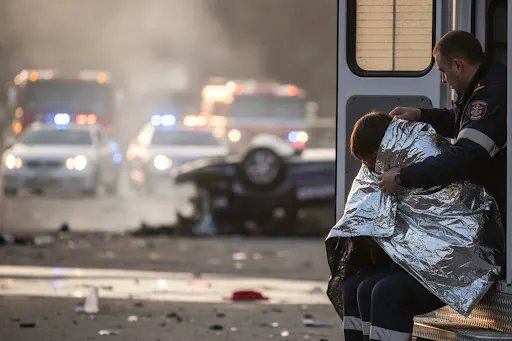

Virginia law builds in safeguards after a crash to protect safety at the scene, create an official record, and make sure there is insurance coverage available if someone is hurt. But those safeguards only help you if you understand what they require and how insurers use the paper trail after a collision.
Below is how those protections work in real Virginia cases and how the Virginia car accident lawyers at Tronfeld West & Durrett use them when representing injured drivers and passengers.
1. Safety First: Duties to Stop, Stay, and Help
The first precaution the law takes is to control what drivers must do in the minutes after impact.
Under Virginia Code § 46.2-894, any driver involved in a crash that causes injury, death, or damage to an attended vehicle or other attended property must:
- Stop as close to the scene as possible without creating a new hazard
- Provide their name, address, driver’s license number, and vehicle registration
- Show their license on request
- Give their information to police if they respond
- Render reasonable assistance to anyone who appears injured, which can include calling 911 and arranging transport
Leaving without doing those things is treated as hit-and-run and can be charged as a felony when someone is hurt.
From a safety perspective, this set of duties forces drivers to stay put, identify themselves, and help get medical care started instead of disappearing. From a legal perspective, it also means there will usually be a documented scene, identified parties, and a police report we can use later in your claim.
For answers to your questions, call: 800-321-6741
2. Reporting Rules That Create an Official Record
Virginia law also builds in reporting requirements so serious crashes do not disappear into a private handshake.
Police officers who investigate an injury or fatal crash must file a written report with the Virginia Department of Motor Vehicles. Drivers themselves may file a written report with DMV after an accident that involves injury, death, property damage, or an uninsured vehicle under Virginia Code § 46.2-372.
Those reports matter because:
- They fix basic facts like date, time, location, and vehicles involved
- They often include officer observations about damage, skid marks, and apparent violations
- DMV keeps crash data for at least 36 months, which can help show patterns such as dangerous intersections or repeat offenders
Statewide crash statistics from the Virginia DMV Traffic Crash Facts report show the scale of the problem. In 2024, there were 129,244 reported crashes in Virginia, averaging one crash every 4.1 minutes and about 175 people injured per day. When we take on a case, we pull the police report, check DMV records, and secure any supplemental reports to make sure the official record matches what actually happened to you.
“In our cases, one of the fastest ways an insurer tries to limit a claim is by turning the crash timeline into a gray area. A clean report, clear photos, and prompt medical documentation reduce that ambiguity and strengthen your position.” — John Newby, Attorney, Tronfeld West & Durrett
3. Legal Protection for People Who Stop to Help
The law does not only regulate drivers. It also protects people who do the right thing and help at the scene.
Virginia’s Good Samaritan statute, Virginia Code § 8.01-225, gives civil immunity to anyone who in good faith provides emergency care without being paid at the scene of an accident or while transporting an injured person. As long as the rescuer is not grossly negligent or acting with willful misconduct, they generally cannot be sued for ordinary mistakes in how they rendered aid.
Practically, that law is designed to:
- Encourage bystanders to call 911 and start basic first aid
- Protect people who perform CPR or use an AED
- Allow someone to move an injured person out of immediate danger, such as away from a vehicle at risk of catching fire
For our clients, that means the person who pulled you from your car or applied pressure to a bleeding wound is usually shielded from liability, and we focus instead on the driver or company that caused the crash in the first place.
Click to contact us today
4. Insurance Rules That Keep Money on the Table
Virginia also takes precautions on the financial side through mandatory insurance limits and uninsured motorist protections.
For policies taking effect on or after January 1, 2025, Virginia Code § 46.2-472 requires at least:
- $50,000 for injury or death of one person in a single crash
- $100,000 total for injury or death of two or more people
- $25,000 for property damage
On top of that, Virginia Code § 38.2-2206 requires insurers to provide uninsured and underinsured motorist (UM/UIM) coverage, which can step in when the at-fault driver has no insurance or too little to cover your losses.
Those requirements mean that in many serious cases, there is at least one policy, and often several, that can be pursued. In a typical injury claim, we will:
- Identify the at-fault driver’s liability policy
- Look for any commercial or employer policies involved
- Review your own auto policy for UM/UIM coverage
- Analyze how those coverages stack so we do not leave money behind
Without those statutory minimums and UM/UIM rules, far more Virginians would be left with devastating injuries and no realistic way to pay for long-term care.
Complete a Free Case Evaluation form now
5. Deadlines and Evidence Rules That Push Cases Forward
Precautions after a crash are not only about safety — they are also about timing.
The general statute of limitations for personal injury in Virginia is two years from the date of the crash under Virginia Code § 8.01-243. Property damage claims usually have a five-year deadline.
Those deadlines have two key effects:
- They force injured people to move their claim forward instead of letting it sit for years
- They prevent evidence from going completely stale, since most serious cases will be investigated and filed within that two-year window
The law also treats certain types of evidence with special weight: police crash reports required in many serious collisions, medical records documenting injuries, treatment, and prognosis, and expert testimony linking your injuries to the crash and projecting future needs.
At Tronfeld West & Durrett, we treat those deadlines as non-negotiable. We gather records early, preserve electronic evidence where possible, and file suit in time so a judge or jury can decide your claim if the insurer refuses to be reasonable.
6. How These Precautions Actually Protect You in a Real Case
All of these legal precautions interact with each other after a crash:
- Stopping at the scene and calling 911 triggers medical care and a police response
- Reporting rules create a paper trail with DMV and law enforcement
- Good Samaritan protections make it more likely that someone will help you at the roadside
- Insurance statutes make it more likely there is real coverage on the other side and under your own policy
- Filing deadlines and evidence rules push the case toward resolution
The Virginia car accident lawyers at Tronfeld West & Durrett use those structures to your advantage. When you hire us after a collision, we:
- Pull and review the full crash report and any supplemental DMV records
- Identify all drivers, owners, and companies that may be liable
- Track down witnesses and preserve key documentation early
- Analyze every applicable policy, including UM/UIM, to reach all available coverage
- Work with your doctors to document both immediate injuries and long-term limitations
- File suit within the statute of limitations if negotiations are not producing a fair result
Talk With a Virginia Car Accident Lawyer – Free Consultation
The law cannot prevent every collision, but it does create a framework for what happens next. Those rules are technical enough that insurance companies may try to use them to limit what they pay.
If you were hurt in a Virginia car crash and want to understand how these legal precautions apply to your situation, you do not have to figure it out alone. You can request a free consultation with a Virginia car accident lawyer at Tronfeld West & Durrett about your injuries, medical bills, and next steps.
FAQs About Legal Precautions After a Car Accident in Virginia
What should I do immediately after a car accident to comply with Virginia law?
You should stop as close to the scene as possible without creating a new hazard, check for injuries, call 911 if anyone may be hurt, exchange identification and insurance information, and stay until law enforcement says you can leave. Those duties come from Virginia Code § 46.2-894, which applies even if the damage looks minor.
Do I have to report every car accident to DMV or the police?
Serious crashes involving injury, death, or significant property damage should always be reported to law enforcement. Officers are required to submit reports to DMV in those circumstances, and drivers can also file a written report with DMV under Virginia Code § 46.2-372. Failing to report when required can lead to a misdemeanor, and skipping the report can also hurt your injury claim because there may be no official record of what happened.
What happens if I leave the scene of an accident in Virginia?
Leaving without stopping, giving information, and offering reasonable assistance can be charged as hit and run. When someone is hurt or killed, a violation of § 46.2-894 is a Class 5 felony, which can mean prison time, fines, and a long license suspension. Even in property-damage-only crashes, leaving the scene can still result in criminal charges and serious consequences for your driving record.
How does the law protect me if the other driver has no insurance?
If the at-fault driver is uninsured or underinsured, Virginia Code § 38.2-2206 allows your own uninsured and underinsured motorist coverage to step in as if it were their policy. That coverage can pay for medical bills, lost wages, and other damages up to your UM/UIM limits, although your insurer will still investigate fault and the extent of your injuries.
How long do I have to take legal action after a car accident?
For most injury claims arising from a car crash, you have two years from the date of the accident to file a lawsuit, under Virginia Code § 8.01-243. Property damage claims usually have a five-year deadline. If you miss the applicable deadline, the case is usually barred, regardless of how clear the other driver’s fault was.
Does the law require me to accept the insurance company’s first offer?
No. Settlement is voluntary. Insurance companies often make early offers before they have all of your medical information or before you know whether you will need surgery or long-term treatment. Once you sign a release, your claim is finished, even if new problems emerge. The law gives you time within the statute of limitations to investigate your injuries and consult a lawyer before you decide whether to settle or file suit.
Are there legal protections if I stop to help someone else after a crash?
Yes. Virginia’s Good Samaritan law in Virginia Code § 8.01-225 generally protects people who provide emergency assistance in good faith without being paid from civil liability for ordinary negligence. As long as you act reasonably for the situation and are not grossly negligent or intentionally harmful, the law is designed to shield you from lawsuits while encouraging quick help at the scene.
Call or text 800-321-6741 or complete a Free Case Evaluation form