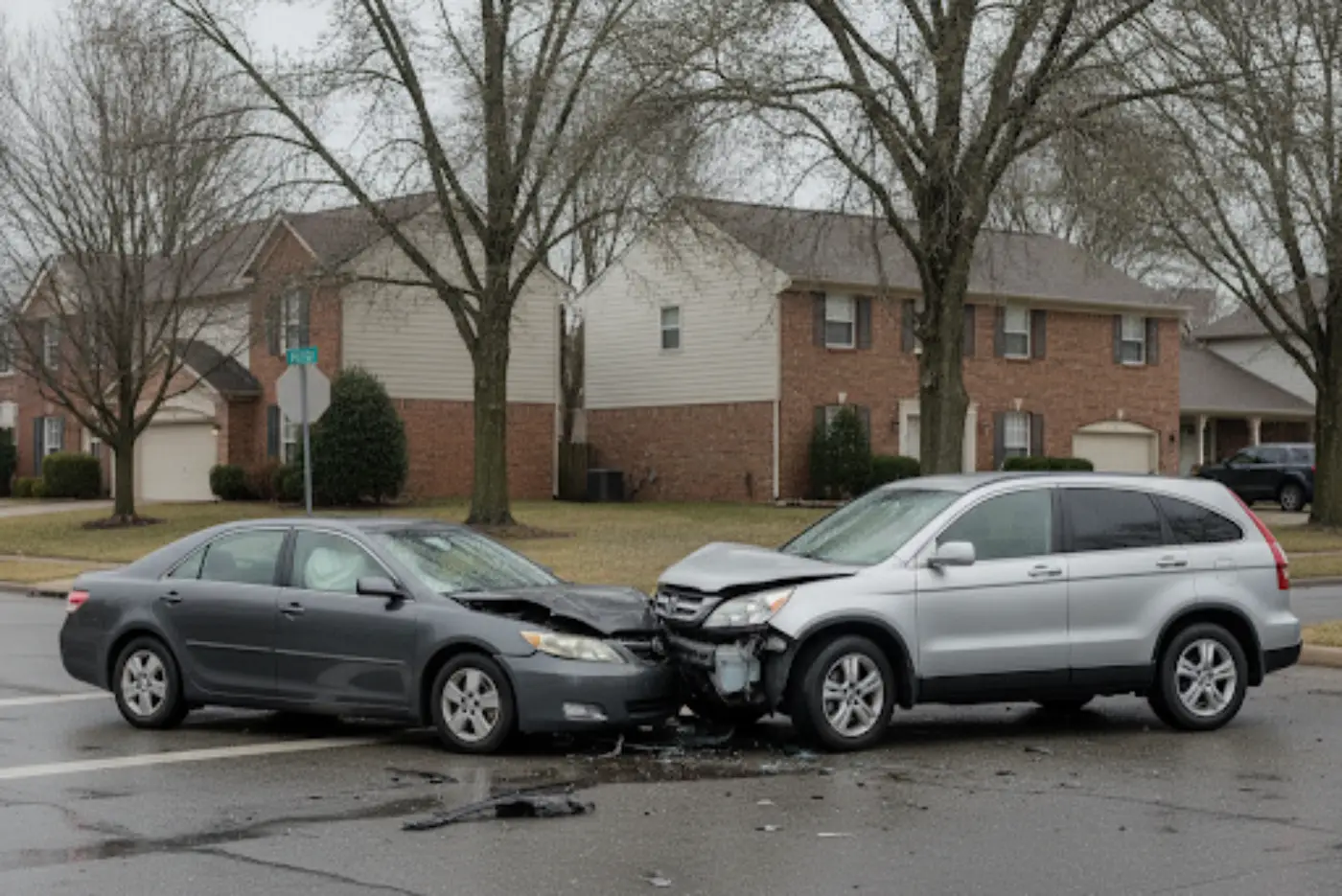

Negligence per se is a legal doctrine used in personal injury cases where a defendant is presumed negligent because their conduct violated a statute, regulation, or ordinance designed to protect the public from specific harm.
Defining Negligence Per Se
The term “negligence per se” translates from Latin as “negligence in itself.” In a standard personal injury claim, the plaintiff must prove that the defendant acted unreasonably. However, under the doctrine of negligence per se, the law considers the violation of a safety statute as automatic proof of a breach of duty. If a driver runs a red light and hits you, they have violated a traffic law intended to keep roads safe; therefore, you generally do not need to argue whether a “reasonable person” would have stopped – the law already dictates that they should have.

For answers to your questions, call: 800-321-6741
The Elements of Negligence Per Se
To successfully establish a claim based on negligence per se, a plaintiff must prove specific elements beyond just showing a law was broken. Courts generally require the following four conditions to be met:
- Violation of a Statute: The defendant clearly violated a specific law, regulation, or municipal ordinance.
- Protected Class: The plaintiff belongs to the class of persons that the law was intended to protect (e.g., traffic laws protect other drivers and pedestrians).
- Prevention of Harm: The injury that occurred is the specific type of harm the statute was designed to prevent.
- Proximate Cause: The violation of the statute was the direct cause of the plaintiff’s injury or damages.
If these elements are met, the burden of proof shifts significantly, often making it easier for the injured party to recover damages.
Common Examples of Negligence Per Se
This legal principle applies to various scenarios, particularly those involving public safety regulations. Common examples include:
- Traffic Violations: Car accidents caused by speeding, driving under the influence (DUI), or failing to yield the right of way are classic examples. If a driver is cited for these offenses after a crash, it strongly supports a negligence per se claim.
- Building Code Violations: If a property owner fails to install handrails on stairs as required by local code, and a visitor falls, this may constitute premises liability under negligence per se.
- Animal Control Laws: A dog owner violating a “leash law” may be held liable if their unrestrained dog bites a passerby.
- Consumer Safety: Selling products that violate federal safety standards can lead to liability if those products injure consumers.
Click to contact us today
Negligence Per Se vs. Ordinary Negligence
The primary difference between negligence per se and ordinary negligence lies in how the “duty of care” is established.
- Ordinary Negligence: The jury must determine what a “reasonable person” would have done under similar circumstances. This standard can be subjective and open to interpretation.
- Negligence Per Se: The standard of care is defined by the legislature through the statute. The jury does not decide if the conduct was reasonable; the law has already decided that violating the statute is unreasonable.
Complete a Free Case Evaluation form now
Difference Between Negligence Per Se and Strict Liability
It is common to confuse negligence per se with strict liability, but they operate differently in personal injury law.
- Negligence Per Se: The defendant is presumed negligent because they violated a safety law, but they can sometimes offer a valid excuse for the violation. Fault is still the core issue – it is just proven via the statute.
- Strict Liability: This applies to inherently dangerous activities (like blasting explosives or keeping wild animals) or defective products. In these cases, the defendant is liable for damages regardless of how careful they were or whether they followed the law. Fault is irrelevant; if the injury happened, they are responsible.
Negligence Per Se in Virginia
While negligence per se can strengthen a case, Virginia law adds a layer of complexity through the doctrine of contributory negligence. Virginia is one of the few states where, if the plaintiff contributed to the accident in any way (even 1%), they may be barred from recovering compensation. For example, even if a defendant was speeding (negligence per se), if the plaintiff made an unsafe lane change that contributed to the crash, the claim could be dismissed. This makes it vital to have experienced legal representation from a firm like Tronfeld West & Durrett to navigate these specific local statutes.
Relationship with Res Ipsa Loquitur
Negligence per se is often confused with res ipsa loquitur, but they are distinct concepts. Res ipsa loquitur (“the thing speaks for itself”) allows a jury to infer negligence when an accident occurs that typically wouldn’t happen without negligence (e.g., a surgical sponge left inside a patient), even if no specific statute was violated. In contrast, negligence per se relies explicitly on the violation of a written law.
Is Negligence Per Se an Automatic Win? (Rebuttable Presumption)
While establishing negligence per se strengthens a case significantly, it does not guarantee a victory. In many jurisdictions, including Virginia, a statutory violation creates a “rebuttable presumption” of negligence.
This means the burden of proof shifts to the defendant, who must then prove they had a valid legal excuse for violating the statute. Courts may accept the following as valid excuses:
- Incapacity: The defendant suffered a sudden medical emergency (e.g., a heart attack) that made compliance impossible.
- Emergency: The violation was committed to avoid a greater danger (e.g., swerving into the wrong lane to avoid hitting a child).
- Lack of Knowledge: The defendant could not have known about the factual circumstances that caused the violation (e.g., a tail light burnt out while driving).
Violation of Federal Regulations: Trucking Accidents
Negligence per se is particularly relevant in truck accident cases. Commercial truck drivers and trucking companies are governed by strict federal rules known as the Federal Motor Carrier Safety Regulations (FMCSR).
If a truck driver causes an accident while violating these federal statutes, it can be powerful grounds for a negligence per se claim. Common violations include:
- Hours of Service Violations: Driving longer than legally allowed without a break.
- Weight Limit Violations: Overloading a truck, making it difficult to stop.
- Maintenance Failures: Failing to perform required safety inspections on brakes or tires.
At Tronfeld West & Durrett, our attorneys are well-versed in investigating these specific federal violations to hold trucking companies accountable.
Defenses Against Negligence Per Se
A defendant can raise defenses even if they violated a statute. They might argue that:
- Compliance with the law would have caused greater harm than violating it (e.g., swerving across a double yellow line to avoid a child running into the road).
- The violation was due to an incapacity or emergency not of their own making.
- The statute was not intended to protect the plaintiff or prevent the specific type of harm that occurred.
Why You Need a Virginia Injury Attorney
Proving negligence per se requires more than just pointing to a broken law; it requires establishing causation and navigating complex defenses. Since 1972, Tronfeld West & Durrett has been serving the injured in Virginia. We offer the resources of a large firm with the personal attention of a small practice. Whether you are in Richmond, Chesterfield, or Virginia Beach, our attorneys understand how to leverage statutory violations to maximize your compensation.

If you have been injured due to someone else’s violation of the law, do not face the insurance companies alone.
Call or text 800-321-6741 or complete a Free Case Evaluation form