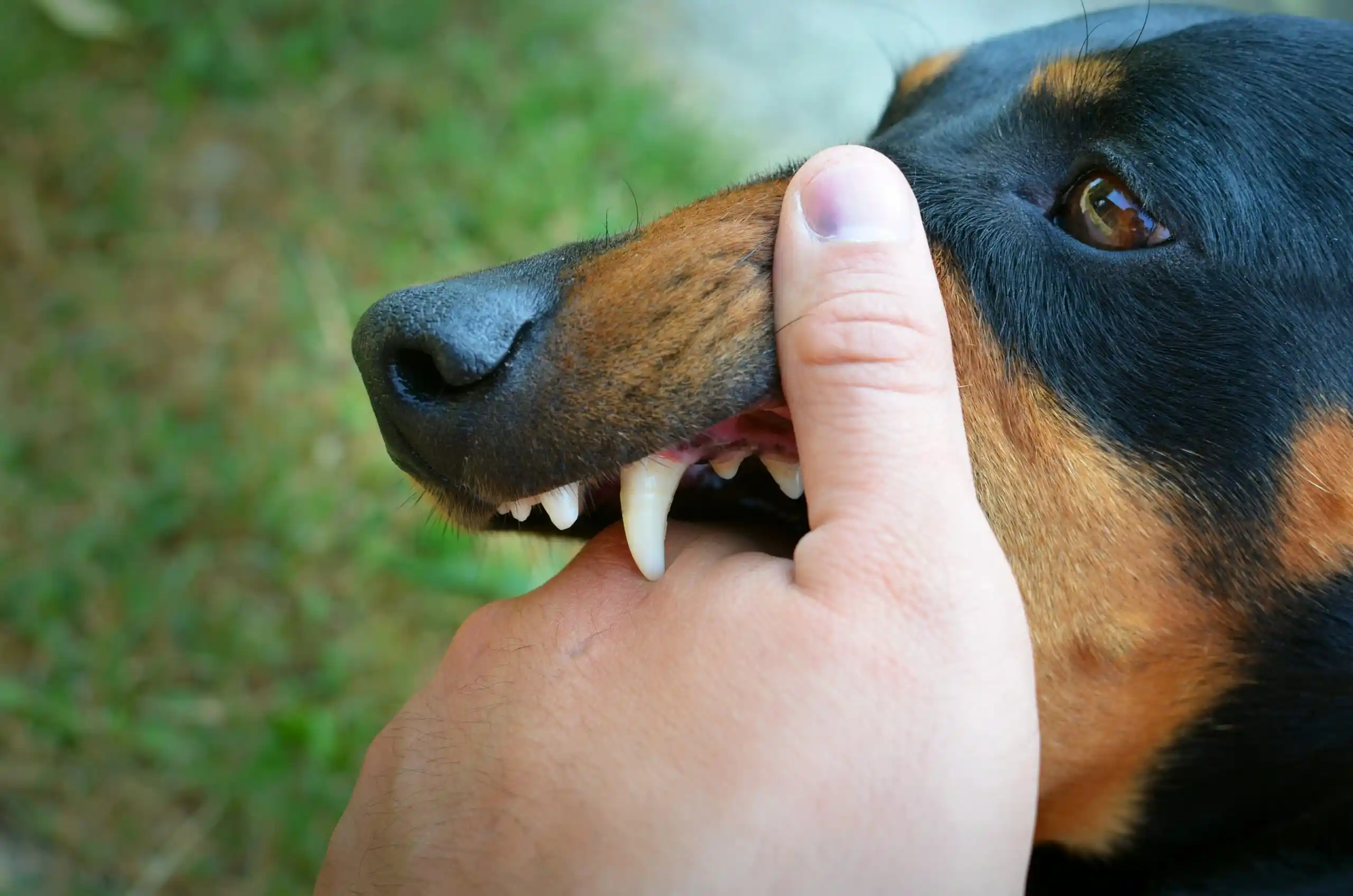

A sudden encounter with an aggressive animal changes an ordinary walk in seconds. Consulting an experienced Richmond personal injury attorney at Tronfeld West & Durrett allows injured individuals to understand their rights under the law immediately following an unexpected attack. Dog attacks in Richmond leave lasting physical scars, painful nerve damage, deep infections, and severe psychological distress. From busy sidewalks in the Fan and Carytown to popular outdoor paths along the James River Park System, dog owners share public spaces with runners, children, and neighbors every single day.
Virginia handles animal attacks differently than many neighboring states. The legal framework relies on a combination of common law doctrines, local municipal ordinances, and strict fault rules. Holding a negligent owner liable requires an intricate grasp of how state statutes interact with local city codes.
The Modified One-Bite Standard in Virginia Common Law
Virginia does not enforce a strict liability statute for ordinary canine bites. Under traditional common law principles, an animal owner is not automatically held liable simply because their dog bit an individual. Instead, the Commonwealth follows a modified version of the traditional rule regarding owner knowledge, often discussed in relation to Virginia dog laws.
To establish civil liability under this common law standard, an injured claimant must prove that the animal possessed dangerous or aggressive tendencies prior to the incident, and that the owner had actual or constructive knowledge of those traits. In legal terminology, this knowledge is known as scienter.
The phrase can be misleading. An animal does not receive a free pass for its initial attack. Evidence of previous vicious propensities can exist without a recorded puncture wound. Courts in Virginia consider multiple behavioral warnings when evaluating whether an owner should have realized their dog posed a public hazard:
- Prior incidents where the dog lunged at, cornered, or snapped at pedestrians without provocation.
- Documented instances of severe aggression toward other domestic animals or neighborhood pets.
- Persistent snarling, growling, and bare-teeth displays toward visitors approaching the property.
- Previous formal complaints lodged with municipal animal protection authorities.
- Habitual lunging against fencing or violent attempts to escape restraint when individuals walk past.
When an owner knows their animal reacts aggressively toward strangers yet fails to take reasonable safety precautions, that owner faces direct liability for the harm their pet inflicts.
For answers to your questions, call: 800-321-6741
Establishing Negligence and Negligence Per Se
Proving prior vicious propensities is not the sole method of obtaining financial compensation after an animal attack. Claimants frequently recover damages through standard negligence claims by demonstrating the foundational elements of negligence under Virginia law. Dog owners bear a legal duty to exercise reasonable care in managing their pets so they do not create an unreasonable risk of physical injury to the public.
An owner breaches this duty when they handle an animal carelessly. Examples include allowing a strong dog to pull away on a crowded street, failing to latch a backyard gate securely, or letting an unfamiliar pet roam freely during a social gathering. When that lack of reasonable caution directly causes an attack, the victim has valid legal grounds to seek recovery.
Even more significant in urban settings is the doctrine of negligence per se. Under Virginia jurisprudence, when a person violates a local safety ordinance enacted to protect the public from bodily harm, the legal system presumes the violator acted negligently as a matter of law. In the landmark case Butler v. Frieden, the Supreme Court of Virginia affirmed that an owner who permits a dog to run at large in violation of an ordinance cannot escape liability by claiming the dog never bit anyone before. The statutory violation itself establishes fault, eliminating the need to demonstrate the owner’s prior knowledge of viciousness.
Richmond Municipal Ordinances Regarding Animal Restraint
Because Virginia grants local municipalities broad discretion to enforce animal control standards, local city rules dictate how negligence per se applies in Richmond. The legal team at Tronfeld West & Durrett routinely examines municipal records when working with an injured client alongside a dedicated dog bite attorney in Richmond.
Restraint laws in Richmond are codified under Chapter 4 of the Richmond City Code. These provisions impose clear, binding legal mandates on owners:
- Prohibition of Running at Large: It is unlawful for an owner to permit any dog to run at large within the corporate boundaries of the City of Richmond. An animal is deemed running at large whenever it is outside the boundaries of the owner’s private property and not secured by a reliable leash held by a person capable of controlling the animal.
- Mandatory Leash Rules in City Parks: Dogs are prohibited from roaming off-leash in public spaces, including municipal parks such as Byrd Park, Forest Hill Park, and Chimborazo Park. The only exceptions apply to specifically designated, fenced dog exercise areas like Barker Field.
- Humane Tethering Standards: The municipal code dictates how animals may be tethered outdoors. Chains or cables must satisfy length and safety requirements, and tethering is prohibited during extreme weather alerts. Improper tethering that allows an animal to snap its restraint and injure an individual creates clear liability.
If an unleashed dog attacks a runner near Monument Avenue or bites a child in Church Hill, the owner’s breach of the city leash ordinance provides immediate evidence of negligence per se.
Click to contact us today
Virginia Dangerous Dog Classifications and Owner Requirements
State legislation establishes strict protocols for pets that have previously attacked people or other animals. Under Virginia Code Section 3.2-6540, an animal can be formally designated as a dangerous dog through a hearing conducted in the local General District Court.
A dangerous dog designation applies when clear evidence proves that an animal bit, attacked, or inflicted injury on a person or companion animal without provocation. If an attack results in serious bodily injury, including broken bones or severe lacerations requiring cosmetic surgery, or if an animal causes a fatality, the court classifies the animal as vicious. Clarifying this distinction is vital when assessing dog bite lawsuit responsibility.
Once the Richmond General District Court declares a dog dangerous, the owner faces stringent ongoing legal requirements:
- The dog must be registered on the publicly accessible Virginia Dangerous Dog Registry.
- The animal must be confined inside the owner’s home or kept within an enclosed, locked, and escape-proof pen when outside.
- The owner must post prominent warning signs on the property alerting visitors to the presence of a dangerous animal.
- The dog must be muzzled and restrained by a short leash under direct adult supervision whenever taken off the owner’s property.
- The owner must secure a minimum of 100,000 dollars in personal liability insurance specifically covering canine-inflicted injuries.
Failing to abide by these statutory requirements is a criminal misdemeanor. If an animal that has already been adjudicated dangerous attacks again, the owner faces severe criminal charges and direct civil exposure.
Complete a Free Case Evaluation form now
The Impact of Pure Contributory Negligence in Virginia
Virginia remains one of the few jurisdictions in the United States adhering to the strict doctrine of contributory negligence in Virginia. This doctrine represents the primary defense insurance carriers utilize to deny legitimate dog attack claims.
Under pure contributory negligence, an injured claimant who bears even one percent of the legal responsibility for the incident is completely barred from receiving any financial compensation from the at-fault defendant. If an insurance company convinces a jury that the victim acted carelessly or provoked the animal, the victim collects nothing. Navigating these defenses frequently overlaps with the work done by a Richmond premises liability attorney, especially when attacks occur on private property.
Defense attorneys and adjusters routinely allege the following actions to eliminate an owner’s liability:
- The victim ignored visible warning signs posted near the entrance of a property.
- The victim reached through a fence, crate, or window to pet an unfamiliar animal.
- The injured individual made sudden, aggressive movements, shouted at, or made provocative gestures toward the dog.
- The victim was unlawfully trespassing on the property where the animal was secured.
- The individual stepped between two unfamiliar dogs engaged in an active fight.
Because the consequences of an allegation of fault are so severe, injured individuals must avoid making recorded statements to insurance investigators without legal guidance. An adjuster often asks leading questions designed specifically to extract admissions that suggest the victim provoked the animal.
Rabies Quarantine and Reporting Protocols in Richmond
Medical issues must be addressed immediately following an attack. Animal bites carry significant rates of bacterial infection from organisms such as Pasteurella multocida and Capnocytophaga. Victims often require emergency room care at facilities like VCU Medical Center, wound cleaning, tetanus shots, and preventative antibiotics.
Reporting the incident is also legally mandatory. Under the Virginia Department of Health rabies protocol, every animal bite involving a human must be reported to the local health director or municipal animal control authorities. In the City of Richmond, Richmond Animal Care and Control manages bite investigations.
The primary concern is the transmission of the rabies virus. Virginia health regulations require any dog that bites a human to undergo a mandatory 10-day quarantine period, regardless of whether the owner claims the dog is up to date on its vaccinations. This quarantine allows health officials to monitor the animal for clinical signs of rabies. If the animal remains healthy throughout the ten days, the victim avoids undergoing an extensive series of post-exposure rabies vaccines.
Damages Recoverable by Bite Victims in Richmond
The financial impact of an animal attack extends well beyond initial hospital treatment. Injured victims in Richmond have the right to seek compensatory damages designed to address their financial, physical, and emotional harm.
Economic damages cover documented financial losses. These include emergency medical transportation, emergency room physician fees, cosmetic and reconstructive plastic surgery procedures, skin graft treatments, physical therapy, and prescription medications. Furthermore, if the victim missed work during recovery or suffered permanent nerve damage that limits their earning potential, lost income and diminished earning capacity are recoverable.
Non-economic damages address intangible losses that permanently alter quality of life. Victims have the right to sue for pain and suffering in Virginia to account for severe physical discomfort during medical treatment, emotional distress, and post-traumatic stress disorder. Dog attacks frequently leave jagged lacerations that heal into permanent, raised scars. When scarring occurs on the face, hands, or neck, substantial damages are awarded to compensate for permanent disfigurement and the resulting loss of self-esteem.
These damages are typically paid through the animal owner’s homeowners insurance or renters insurance policy. Standard policies include personal liability coverage that responds to injuries caused by household pets, providing a financial avenue for full recovery.
Statutory Filing Deadlines for Dog Attack Claims
Taking prompt legal action is critical due to statutory filing limits. Under Virginia Code Section 8.01-243, an injured party must initiate a civil action within two years from the exact date the bite occurred. This rigid deadline represents the formal statute of limitations for personal injury claims in Virginia.
Failing to file suit in the Richmond Circuit Court or the Richmond General District Court within this two-year window results in the complete forfeiture of your right to seek compensation through the court system, regardless of the severity of your injuries.
A specific statutory exception exists when a minor suffers injury. Under Virginia law, when a child under eighteen is bitten by an animal, the two-year statute of limitations is paused until the minor turns eighteen. The victim then has until their twentieth birthday to file an injury lawsuit. Even with this extension, preserving physical evidence, documenting wound progression, and interviewing witnesses promptly is essential for building a compelling case under dog bite laws in Virginia.
Protecting Your Legal Rights After an Attack in Richmond
Recovering from an aggressive animal encounter requires immediate medical and practical intervention. Victims must take specific actions to safeguard their health and build the foundation for a successful legal claim:
- Obtain professional medical care immediately to treat tissue tears, prevent systemic infection, and document the initial wound severity.
- Identify the animal and record the name, phone number, physical address, and insurance carrier of the owner or handler.
- Report the bite to Richmond Animal Care and Control so officers can initiate a formal investigation and manage the ten-day rabies quarantine.
- Photograph all visible injuries immediately, including punctures, bruising, and torn or blood-soaked clothing.
- Document the scene of the attack, capturing missing fence boards, unlatched gates, or the absence of posted warning signs.
- Collect names and contact details from neighbors or bystanders who witnessed the incident or observed the dog roaming unleashed.
- Refrain from discussing the incident on social media or providing recorded statements to insurance claims adjusters.
Building a successful injury claim under Virginia dog bite laws demands swift investigation and thorough knowledge of Richmond ordinances. The attorneys at Tronfeld West & Durrett bring decades of localized courtroom experience to help victims overcome contributory negligence defenses and secure the financial compensation they need to heal.
Call or text 800-321-6741 or complete a Free Case Evaluation form